Categories
Tags
-
#carpet
#cooking
#Outdoor Rattan Set
#Leisure Chair
#Ice Maker Machine
#how to
#pet care
#outdoor furniture
##clean #cleaning tips
#treadmill
# sports
#dog cages
#Corner Sofa Set
#Home Appliances
#Bedroom Shelving Ideas
#Rack Shelving
#rattan furniture
#air fryer
#Rattan Garden Furniture
#Best Barbeque grill
#dog training
#metal sheds for sale
#Cooling Solutions
#Outdoor Living
#Storage solutions
##GardenTool
#shelves
#Garage Storage Solutions
#DIY Home
#Household Appliances
#BBQ grill
#Carpet flooring
#Crates for dogs
#healthy meals
#homegardening
##lifestyle
#BBQ cooking set
#garden sofa
#egg chair
#Hose Pipe
#UK Home
#bbq
#running machine
#garage shelving
#rattan sofa
#Electric Fan
#watering
Archives
Ice Maker vs Freezer Ice: Which is better for Modern Homes
-
Posted by Lucy Zheng Filed in Family & Home #Ice Maker Machine #Home Appliances ##lifestyle #UK Home 41 views
There’s a very specific moment that seems to happen in a lot of UK homes every spring.
The weather finally starts behaving itself for once. Somebody opens the fridge looking for something cold. Maybe it’s an iced coffee before work, a gin and tonic on a Friday evening, or a soft drink after a long commute home. Then comes the realisation:
There’s barely any ice left.
Someone forgot to refill the tray again.
At that point, people usually do one of three things. They wait several hours for more ice. They awkwardly crack half-frozen cubes out of the tray and pretend it’s fine. Or they start searching online for a countertop ice maker.
A few years ago, ice makers still felt like one of those “nice to have” kitchen gadgets most people ignored. Now they’re becoming surprisingly common in UK households, especially among people who regularly drink iced coffee, entertain guests, work from home, or simply got tired of dealing with freezer trays.
And honestly, once you’ve used a decent ice maker for a while, traditional ice trays suddenly feel incredibly outdated.
The Problem With Freezer Ice Nobody Talks About
Technically, freezer trays work.
That’s the thing. They’ve worked for decades, which is why most people never question them. You fill the tray, slide it into the freezer, wait a few hours, twist it around later, and eventually you get ice.
But once you start paying attention, you realise how inconvenient the whole process actually is.
First, there’s timing.
Ice trays demand planning. You have to remember to refill them before you need them. If you forget, there’s no quick fix. British summers might not be extreme compared to southern Europe, but during warm evenings or house gatherings, people suddenly use far more ice than they expect.
Especially now that cold drinks are becoming part of everyday routines rather than something reserved for heatwaves.
Walk into almost any UK coffee chain now and iced drinks dominate the menu for half the year. People recreate those drinks at home too. Iced lattes, cold brew, iced matcha, flavoured sparkling water — none of these work properly with two tiny leftover freezer cubes floating sadly at the top.
Why Speed Changes Everything
This is usually the first thing people notice when switching to an ice maker.
The speed feels slightly ridiculous at first.
With freezer trays, you’re used to waiting hours. With a countertop ice maker, you switch it on and often get the first batch in under ten minutes.
That changes behaviour completely.
People stop “saving” ice.
They stop rationing cubes because they’re worried about running out later. They start using ice casually, the same way they’d use hot water from a kettle.
And in the UK specifically, that convenience matters more than people expect because homes here aren’t always designed around large entertaining spaces or oversized American-style fridge freezers.
A lot of flats and smaller kitchens simply don’t have huge freezer capacity.
So when guests come over for a barbecue or drinks night, freezer trays get overwhelmed fast.
The Great British Garden Gathering Problem
This is where ice makers suddenly start making a lot more sense.
Anyone who’s hosted people in a British garden during summer knows how strangely chaotic it gets.
The weather forecast says sunny. Everyone rushes outside immediately because nobody trusts it to last. Somebody brings prosecco. Somebody else wants iced cola. Someone inevitably asks if there’s enough ice.
There usually isn’t.
Freezer trays disappear ridiculously quickly during gatherings.
And because they freeze slowly, once they’re gone, they’re gone.
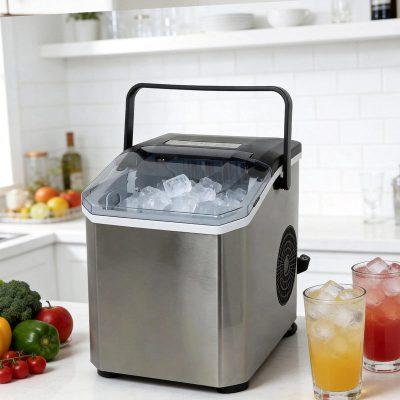
A countertop ice maker solves that problem in a way people don’t fully appreciate until they experience it. You just keep producing more ice throughout the evening instead of treating it like a limited resource.
That consistency feels surprisingly luxurious.
Not flashy luxury.
Just practical comfort.
Ice Quality Is More Noticeable Than People Expect
A lot of people assume ice is just ice until they compare them side by side.
Freezer tray cubes often come out cloudy, uneven, or cracked. Sometimes they absorb freezer smells too. If your freezer contains frozen onions, garlic bread, or leftovers, there’s a decent chance your ice quietly picks up traces of those odours over time.
Most people don’t notice immediately.
Then they use cleaner ice from a dedicated machine and suddenly realise their freezer cubes tasted slightly odd all along.
Countertop ice makers usually produce smoother, clearer, more uniform ice. The texture feels different in drinks too.
And presentation genuinely matters more now than it used to.
Social media probably influenced this more than people admit.
Drinks have become aesthetic. People care how iced coffee looks in a glass. They buy reusable tumblers, syrups, fancy straws, cocktail garnishes, all sorts.
Good ice became part of that experience.
Working From Home Changed Drinking Habits
One thing that quietly boosted the popularity of ice makers in the UK was the rise of remote work.
People spending more time at home naturally started upgrading small daily routines.
Instead of grabbing an iced coffee during lunch breaks, people began making them themselves. Instead of office vending machine drinks, they stocked their own kitchens.
That’s when many households realised how annoying freezer trays actually are when you use ice every single day.
It’s manageable occasionally.
Daily use is different.
The constant refilling becomes tedious fast.
And because many people work from bedrooms, flats, or compact home offices, convenience matters more than ever. Small appliances that save time tend to stick around because they quietly remove friction from daily routines.
Freezer Space Is Already Limited Enough
UK kitchens are not famous for massive appliances.
A lot of households still use fairly compact fridge freezers, especially in cities or rented flats. Once you start filling the freezer with meal prep containers, frozen food, desserts, or bulk shopping, ice trays become awkward.
They spill easily.
They get buried under frozen chips.
Someone accidentally tilts them sideways.
Then you end up with weird half-cubes stuck together in one corner.
An ice maker removes that entire issue because it creates ice independently instead of competing for freezer space.
For smaller households, that practicality matters more than flashy features.
The Convenience Factor Is Hard To Reverse
This is probably the biggest reason people rarely go back once they own an ice maker.
You stop thinking about ice entirely.
That sounds minor, but it changes daily habits more than expected.
You want iced water after a gym session? Ice is ready.
Friends unexpectedly come over? Fine.
Hot evening after work? Sorted.
No checking trays. No twisting frozen plastic. No discovering someone emptied the last cubes without refilling anything.
The appliance quietly removes a repetitive annoyance from daily life.
That’s why so many people describe ice makers as one of those purchases they didn’t expect to use so often.
Portable Ice Makers Fit Modern Living Better
Another thing people overlook is portability.
A freezer is fixed permanently in the kitchen.
Countertop ice makers move around easily.
That matters more in the UK than people might assume because outdoor spaces here are often flexible rather than huge. People use patios, conservatories, garden rooms, caravans, holiday cottages, camper vans, even temporary outdoor setups during summer.
Portable ice makers fit naturally into that lifestyle.
You can bring one into the garden during gatherings. Use it in a rented holiday home. Take it along for camping trips with electrical hookups.
They feel less like permanent appliances and more like adaptable tools.
The Hidden Annoyance of Ice Trays
There’s also the physical side nobody really mentions.
Ice trays are annoying to use.
Especially cheap ones.
The cubes stick. The tray bends awkwardly. Water spills while carrying it across the kitchen. Half the cubes crack apart while the other half refuse to come out at all.
Then somebody aggressively twists the tray and sends ice skidding across the floor.
Every household has experienced this.
It’s not a serious problem, obviously.
But it’s one of those tiny recurring frustrations people gradually get tired of.
Modern kitchen appliances succeed because they remove small annoyances consistently, not because they completely reinvent life.
Ice makers fall into that category perfectly.
Why Ice Matters More Than It Used To
Cold drinks used to feel seasonal in the UK.
That’s changed.
Coffee culture shifted habits massively over the past decade. Younger consumers especially now drink iced beverages year-round, not just during hot weather.
Walk through London, Manchester, Birmingham, or even smaller towns and you’ll see people carrying iced drinks in winter.
That demand naturally carried into home kitchens.
The rise of home cafés, cocktail culture, mocktails, protein shakes, flavoured sparkling water, and reusable tumblers all contributed too.
Once ice becomes part of everyday routines rather than occasional use, convenience suddenly matters far more.
Hygiene Is Another Quiet Advantage
People don’t always think about freezer hygiene until something smells strange.
Ice trays sit exposed inside freezers surrounded by food storage. Over time, they collect odours, dust particles, and occasional spills.
Unless they’re cleaned regularly, they become surprisingly unpleasant.
Dedicated ice makers usually keep water enclosed in a much cleaner system. Many models also include cleaning cycles or removable components that are easier to maintain properly.
For households that regularly host guests, this becomes more important than expected.
Nobody wants drinks tasting faintly of freezer air.
Are Ice Makers Worth It For Everyone?
Probably not.
If somebody uses ice once every few weeks, freezer trays are completely fine.
But certain households notice the upgrade immediately.
People who regularly drink iced coffee.
Families with teenagers constantly making cold drinks.
Anyone who entertains often.
Home cocktail enthusiasts.
Small office setups.
Garden gathering hosts.
Gym-focused households.
Once daily ice use becomes normal, an ice maker starts making practical sense very quickly.
Why More UK Households Are Buying Small Convenience Appliances
There’s also a broader shift happening in British homes generally.
People increasingly invest in appliances that improve everyday comfort rather than purely decorative gadgets.
Air fryers exploded for the same reason.
Robot vacuum cleaners too.
Portable ice makers fit that trend perfectly because they solve a small but recurring inconvenience efficiently.
And compared to major kitchen renovations or expensive appliances, they’re relatively accessible.
That combination matters a lot.
It’s Less About Luxury And More About Routine
That’s probably the most interesting thing about ice makers.
They sound slightly indulgent until you actually use one.
Then you realise they’re not really about luxury at all.
They’re about convenience becoming invisible.
No waiting.
No planning ahead.
No empty trays sitting forgotten in the freezer.
Just reliable ice whenever you want it.
And once that becomes normal, going back to freezer trays feels oddly primitive.
Especially during a warm British evening when everybody suddenly wants another cold drink at exactly the same time.