Categories
Tags
-
#uk
#Mistakes
#Small Business
#Sublimation Transfer Printing suppliers
#how to
# Business
#Ceramic Mugs
##Custom printing
#DTF printing
#t-shirt printing
#DTF
##Printing
#DOORMAT
#diy
#Dye Sublimation Paper
#Custom T-Shirts
#sublimation
#UK sellers
##leather
#Heat Transfer Vinyls
##SmallBusiness
##PolymerProduction
#heat press
#Mugs and Cups
#Coffee Mug
#vinyl
#UKBusinesses
#Heat Transfer
#clam heat press
#heat press 15x15
#EtsySeller
#sublimation blanks
#hustle
#Heat Press Machine
#Sublimation Printing
#Automatic
#How to remove HTV
#print tips
#cutter plotter
#HTV
Archives
Best Fabric for Sublimation Printing That Actually Sells
-
Posted by Edi Jiang Filed in Business #heat press #UKBusinesses #sublimation blanks #Sublimation Printing 154 views
If you've been looking into sublimation printing for more than five minutes, you've probably noticed something.
Most beginner guides spend pages talking about printers, heat presses and colour profiles, yet barely mention the material you're printing on. It's almost as if the fabric is an afterthought.
It isn't.
In fact, if there's one thing that determines whether your finished product looks like something people are happy to pay for or something they'll return a week later, it's the fabric.
Many people are starting to make the same mistake. They buy a decent printer, invest in a heat press, order a box of random blanks online and assume everything else will fall into place.
Then the first few products come out looking disappointing. The colours aren't as vibrant as expected. The design feels dull. Some items look great at first but fade after a few washes. Others never look sharp to begin with.
The equipment gets blamed.
The ink gets blamed.
The transfer paper gets blamed.
More often than not, the real problem is the material itself.
Learning how different fabrics behave is one of the quickest ways to improve your results without spending another penny on equipment. It also saves a surprising amount of money because you stop buying products that were never suitable for sublimation in the first place.
Don't Choose a Fabric First. Decide What You Want to Sell.
This might sound backwards, but beginners often ask the wrong question.
Instead of asking, "What's the best fabric for sublimation?", ask yourself something much simpler.
What are you actually planning to sell?
The answer changes everything.
Someone producing personalised sports shirts has completely different requirements from someone making decorative cushion covers or custom tote bags. A fabric that performs brilliantly for activewear might feel completely out of place in a home décor collection.
Trying to find one fabric that does everything usually ends with a shelf full of products that don't quite fit any market.
It's far easier to choose a small product range first, then work backwards to find the most suitable material.
Many successful small businesses begin with only two or three products. They learn those products inside out before expanding into anything else.
That approach isn't just easier. It's usually far more profitable.
Polyester Isn't Popular by Accident
If you've read anything about sublimation printing before, you've almost certainly heard that polyester is the best option.
There's a good reason for that.
Unlike vinyl printing or screen printing, sublimation doesn't leave the design sitting on top of the fabric. During pressing, the ink turns into a gas and bonds with polyester fibres. The print effectively becomes part of the material itself.
That's why a properly sublimated design feels smooth to the touch.
There's no thick layer of ink.
No cracking.
No peeling.
No heavy texture.
The result often feels exactly like the original fabric, only with colour added.
For beginners, this consistency is incredibly valuable.
You already have enough things to learn, from pressure settings to pressing times. Using the right material removes one major variable and makes it much easier to identify what's actually causing any problems.
Why Cotton So Often Leads to Disappointment
One of the biggest misconceptions in sublimation printing is that all light-coloured fabrics will work equally well.
Unfortunately, they won't.
Cotton is probably the biggest source of frustration for newcomers.
It feels soft.
It looks premium.
It's easy to buy.
Naturally, many people assume it's the obvious choice.
Then they produce their first print and wonder why the colours look faded before the item has even left the press.
The issue isn't your technique.
Standard sublimation ink simply doesn't bond with natural cotton fibres in the same way it bonds with polyester.
Some specialist coatings and hybrid systems can improve results, but they introduce extra costs and extra steps that most beginners simply don't need.
If you're only just learning sublimation, keeping things simple is usually the smarter decision.
White polyester remains the easiest, most forgiving material to work with.
Not All Polyester Feels Cheap Anymore
Years ago, polyester had a reputation for looking shiny and feeling uncomfortable.
That reputation has stuck around far longer than it deserves.
Modern polyester fabrics are completely different from the sports tops many people remember from years ago.
Today's materials can feel lightweight, breathable and surprisingly soft. Some premium polyester garments are difficult to distinguish from cotton without checking the label.
This matters because customers don't buy fabric compositions.
They buy comfort.
They buy appearance.
They buy confidence that the product will still look good months after purchase.
If the garment feels nice and the print stays vibrant, very few customers care whether it's made from polyester or not.
That's why experienced sellers rarely choose blanks based on the lowest price alone.
A slightly better-quality garment often creates a much better first impression, generates stronger reviews and leads to repeat customers.
Saving a pound on a blank isn't always saving money if it hurts the overall experience.
White Isn't Boring. It's Your Best Friend.
New sellers often want to experiment with every colour available.
Black.
Navy.
Forest green.
Charcoal.
It sounds exciting until you remember one important fact.
Sublimation ink doesn't contain white.
The colours you print are influenced by the colour of the fabric underneath.
That's why white or very light polyester consistently produces the brightest and most accurate results.
It also makes colour management much easier.
Instead of constantly adjusting artwork to compensate for darker materials, you can focus on improving your workflow and learning how your equipment behaves.
There's plenty of time to experiment later.
In the beginning, consistency is far more valuable than variety.
Start With Products That Forgive Small Mistakes
One piece of advice that rarely gets mentioned is to choose products that are naturally easier to print.
A white polyester T-shirt is surprisingly forgiving.
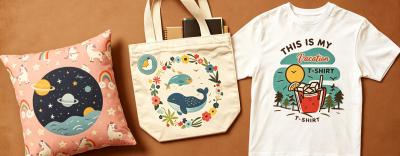
So is a simple polyester tote bag.
Basic cushion covers are another excellent option.
These products have large printable areas, straightforward pressing conditions and relatively low material costs. If something goes wrong, replacing the blank isn't expensive.
Compare that with attempting stretch sportswear or textured home décor fabrics in your first week.
The margin for error becomes much smaller.
You'll spend more time wondering whether the problem is your settings, the material or your equipment.
Building confidence early makes a huge difference.
Every successful print teaches you something.
Every failed one should have an obvious lesson behind it, rather than leaving you completely confused.
That becomes much easier when you're working with reliable materials that behave predictably.
How Fabric Texture Changes the Final Result
When people compare two finished sublimation products, they usually look at the design first.
Professionals often look at the fabric.
Texture has a bigger impact than many beginners realise. Two products made from polyester can produce completely different results simply because the surface is different.
A smooth fabric usually delivers sharper detail. Fine lines stay crisp, small lettering is easier to read, and photographs appear cleaner. That's one reason smooth polyester is so popular for clothing and promotional products.
Textured fabrics create a different effect. Materials designed to resemble linen, for example, naturally soften the image slightly. Tiny details become less noticeable, but the finished product often feels warmer and more premium.
Neither option is better.
They simply suit different products.
If you're creating personalised cushions or home décor, a softer, slightly textured appearance often works beautifully. If you're producing branded workwear or sports tops with logos and small text, you'll probably want the cleanest surface possible.
Matching the fabric to the style of artwork makes far more difference than endlessly adjusting printer settings.
The Best Fabrics for Different Sublimation Products
Once you've decided what you want to sell, choosing materials becomes much easier.
T-Shirts
For most beginners, white polyester T-shirts remain the safest place to start.
They're affordable, widely available and forgiving enough to help you learn the basics without wasting too many blanks.
Better-quality polyester also feels much nicer than many people expect. Modern fabrics are lightweight, breathable and comfortable enough for everyday wear.
If you're planning to sell fashion pieces rather than promotional clothing, pay attention to the weight of the fabric as well.
A heavier shirt often feels more premium, while lightweight performance fabrics suit sportswear better.
Avoid buying the cheapest blanks you can find simply because they're inexpensive. Thin fabric can make even a great design look less impressive.
Customers may not know the technical specifications, but they'll certainly notice the difference in quality.
Tote Bags
Personalised tote bags continue to be one of the easiest products to sell.
They're practical, inexpensive to post and appeal to a wide range of customers, from students and teachers to small businesses and gift buyers.
The biggest mistake beginners make is assuming every canvas bag is suitable for sublimation.
Many inexpensive canvas bags are made from cotton, which simply isn't ideal for standard sublimation.
Instead, look for polyester canvas or high-polyester blends.
You'll get brighter colours, better durability and much more consistent results.
Another small detail that's easy to overlook is the stitching.
The thick seams around the edges can affect pressure during pressing. If the printable area isn't completely flat, parts of the design may transfer unevenly.
Using a pressing pillow or simply raising the printable section slightly can solve this problem without buying expensive accessories.
Cushion Covers
Home décor is often overlooked by new businesses, but it's a category with surprisingly loyal customers.
People love buying personalised items for birthdays, weddings, new homes and Christmas gifts.
Unlike fashion, cushion covers don't have sizing issues, making them much easier to sell online.
Polyester linen offers a lovely natural appearance that's popular with rustic interiors.
Peach skin polyester gives brighter colours and sharper detail.
Velvet-style polyester creates a more luxurious look, especially during autumn and winter collections.
Each material has its own character, so it's worth ordering a few samples before committing to larger quantities.
You'll quickly discover which style suits your designs best.
Sportswear
Sportswear is where sublimation really shines.
Because the ink becomes part of the fabric rather than sitting on top, the garment remains breathable even with full-colour graphics.
That's why football shirts, cycling jerseys, running tops and esports uniforms rely so heavily on sublimation.
However, sports fabrics introduce new challenges.
Many performance materials stretch.
If a design is printed onto fabric that later stretches significantly, darker colours may appear lighter in areas under tension.
Temperature control also becomes more important because lightweight performance fabrics can scorch more easily than heavier materials.
For complete beginners, it's usually worth gaining confidence in standard polyester garments before moving into technical sportswear.
Small Details That Make a Big Difference
Most people expect successful sublimation businesses to have expensive equipment.
The reality is often much less glamorous.
Consistent results usually come from paying attention to small details rather than constantly upgrading machinery.
One example is moisture.
Polyester naturally absorbs a little moisture from the air. If you skip a quick pre-press, that moisture turns into steam during transfer, sometimes creating faded patches or blurry areas.
A few seconds of pre-pressing is often enough to prevent the problem entirely.
Dust is another common issue.
Tiny fibres that are almost invisible before pressing can become surprisingly obvious once the design has transferred.
Keeping a lint roller beside your heat press takes seconds but can save an otherwise perfect product.
Paper movement causes problems, too.
Even a slight shift when opening the press can create ghosting, especially on larger graphics.
Heat-resistant tape costs very little and quickly becomes one of the most useful items on your workbench.
None of these habits is complicated.
Together, though, they dramatically improve consistency.
Buying Blanks Without Wasting Money
New businesses often spend far too much money buying one of everything.
It feels sensible because you're experimenting.
In reality, it usually leaves you with shelves full of products you'll never sell.
A much smarter approach is to keep your range small during the early months.
Choose two or three products that genuinely interest you.
Buy a handful of blanks from several suppliers rather than committing to large quantities from one source.
Print the same design on each.
Wash them.
Handle them.
Compare the colours.
Notice how they feel.
Sometimes the slightly more expensive blank turns out to be a far better value because it produces fewer failures and creates happier customers.
The cheapest option isn't always the one that makes the most profit.
Stop Chasing Every Trend
Social media makes every new product look like the next big opportunity.
One week, everyone is selling personalised hoodies.
Next week it's pet bandanas.
Then phone cases.
Then Christmas sacks.
It's easy to believe you're falling behind.
The truth is that constantly changing direction usually slows a business down.
Successful small sublimation sellers often become known for one thing.
Perhaps they specialise in personalised gifts.
Maybe they focus on local sports clubs.
Some build a loyal following around pet products or home décor.
Customers remember businesses with a clear identity.
Trying to serve everyone often means standing out to nobody.
As you gain more experience, expanding your product range becomes much easier because you've already developed reliable production methods.
The strongest businesses aren't necessarily the ones with the biggest catalogue.
They're the ones that consistently deliver products people are happy to recommend.
The Fabric Mistakes That Catch Almost Every Beginner
Everyone makes mistakes when they first get into sublimation. The trick is making the kind that only costs a few pounds rather than a few hundred.
One of the biggest lessons you'll learn is that not every failed print is caused by the printer or heat press. More often than not, it's something much simpler.
Choosing Fabric Based on Price Alone
It's tempting to order the cheapest blanks you can find, especially when you're trying to keep startup costs low.
We've all been there.
A supplier advertises polyester T-shirts at a price that's almost too good to ignore, so you order a large box and expect to save money.
Then the problems begin.
The fabric feels thin. Colours don't look as rich as you expected. Some garments shrink slightly after pressing, while others have inconsistent stitching that makes alignment difficult.
Suddenly, those savings disappear through wasted ink, spoiled transfers and disappointed customers.
Buying better blanks doesn't always mean buying the most expensive ones. It means finding products that deliver consistent results every time.
Consistency is far more valuable than saving a small amount on each item.
Forgetting That White Really Is Best
Sooner or later, most beginners decide to experiment with darker garments.
The idea makes sense. Dark clothing is popular, so surely sublimation should work on it too.
Unfortunately, that's where many people discover one of the biggest limitations of the process.
Sublimation ink is transparent.
It doesn't print white, and it can't completely cover darker colours underneath.
A bright yellow design printed onto a black shirt won't stay bright yellow. The colour underneath changes everything.
If your goal is vibrant, predictable results, stick with white or very light polyester until you've gained more experience with alternative techniques.
It may sound less exciting, but your success rate will improve almost immediately.
Rushing Through Test Prints
When a customer places an order, it's natural to want to get started straight away.
Skipping a test print might save ten minutes today.
It can easily cost an hour later.
Even fabrics that appear identical may react differently to heat.
A pressing time that works perfectly on one supplier's polyester shirt might slightly overheat another.
The safest habit is to test whenever you're using a new blank.
It doesn't have to be a full design.
Even a small colour sample tells you a great deal about how the material behaves.
Professional printers still run tests.
Not because they don't know what they're doing, but because they know every fabric is slightly different.
Spending Your Budget Where It Actually Matters
If your budget is limited, and for most beginners it is, you'll need to decide where spending a little extra makes the biggest difference.
Many newcomers assume the printer should take the largest share of the budget.
In reality, balanced spending usually produces better results.
A dependable heat press with even pressure is worth far more than an expensive printer paired with poor-quality blanks.
Likewise, choosing reliable transfer paper and good polyester products often has a greater impact on print quality than upgrading to the newest piece of equipment.
Think about it this way.
Customers judge the finished product.
They don't ask what model of printer created it.
They notice whether the colours look rich, whether the fabric feels comfortable and whether the item still looks good after repeated use.
Invest in the parts of the process your customers can actually see.
Which Products Give Beginners the Best Value?
Not every sublimation product offers the same balance between effort and profit.
Some require very little time to produce and can still command healthy prices.
Others take far longer and leave very little room for profit.
If you're just starting, personalised tote bags remain one of the safest options.
They're inexpensive to buy, simple to store, easy to package and affordable to post. Customers also tend to view them as useful gifts rather than purely promotional items.
Cushion covers are another strong choice.
They don't involve sizing, they photograph well for online listings, and seasonal designs can be refreshed throughout the year without changing your production process.
Polyester T-shirts are still worth offering, but competition is much stronger than it once was.
Instead of creating generic slogan shirts, look for smaller audiences with shared interests.
Local sports clubs.
Car enthusiasts.
Dog owners.
Gardeners.
Book lovers.
Small communities are often much easier to reach than trying to appeal to everyone.
The more specific your audience, the less likely you are to compete purely on price.
Think Like a Customer, Not Just a Printer
One habit separates experienced sellers from beginners.
Experienced sellers stop looking at products as printers.
They start looking at them as buyers.
Before listing a new product online, ask yourself a few simple questions.
Would you be happy to give this as a gift?
Does the fabric feel good enough to justify the price?
Would you still be pleased with it after six months of use?
Would you recommend it to a friend?
These questions often reveal more than another evening spent adjusting colour profiles.
Customers remember how a product feels just as much as how it looks.
That's especially true for clothing and home décor.
A beautifully printed design on poor-quality fabric rarely creates repeat business.
A well-made product with a clean, durable print often does.
Growing Without Making Things Complicated
It's easy to believe you need dozens of products before your business looks professional.
You don't.
In fact, keeping your catalogue focused usually makes life much easier.
A small collection of products means fewer blanks to store, fewer pressing settings to remember and fewer chances for mistakes.
It also gives you time to refine your process.
You'll discover which suppliers deliver consistently, which fabrics customers prefer and which designs genuinely sell instead of simply attracting likes on social media.
Growth comes naturally once those foundations are in place.
There's no need to rush into every trend or invest in equipment you won't fully use.
Many successful sublimation businesses spent their first year producing just a handful of products exceptionally well.
Choosing the Right Fabric Is Really About Choosing Fewer Problems
When people first hear about sublimation printing, they often expect the learning curve to revolve around machines and software.
In reality, the material you choose shapes almost everything that follows.
The right fabric makes colours appear brighter, reduces failed transfers and gives customers a product they're genuinely happy to use. It also makes learning the craft far less frustrating, because you're removing one of the biggest causes of inconsistent results.
For anyone just getting started, there's no need to chase every new fabric or every trend that appears on social media.
Start with dependable white polyester products.
Learn how they respond to your equipment.
Get comfortable with pressing times, pressure and workflow.
Once those skills become second nature, experimenting with textured fabrics, performance materials, or more specialised products feels far less risky.
The businesses that last aren't usually the ones with the biggest range or the most expensive equipment.
They're the ones that consistently produce quality items, understand what their customers actually want and continue improving one product at a time.
That's a far more sustainable way to build a sublimation business, and it gives beginners the best chance of turning a new hobby into something genuinely profitable.