Categories
Tags
-
#uk
#Mistakes
#Small Business
#Sublimation Transfer Printing suppliers
#how to
# Business
#Ceramic Mugs
##Custom printing
#DTF printing
#t-shirt printing
#DTF
##Printing
#DOORMAT
#diy
#Dye Sublimation Paper
#Custom T-Shirts
#sublimation
#UK sellers
##leather
#Heat Transfer Vinyls
##SmallBusiness
##PolymerProduction
#heat press
#Mugs and Cups
#Coffee Mug
#vinyl
#UKBusinesses
#Heat Transfer
#clam heat press
#heat press 15x15
#EtsySeller
#sublimation blanks
#hustle
#Heat Press Machine
#Sublimation Printing
#Automatic
#How to remove HTV
#print tips
#cutter plotter
#HTV
Archives
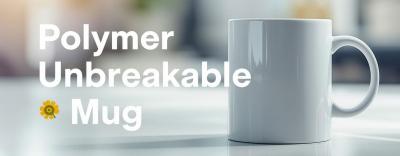
Polymer Unbreakable Mugs: Are They Really Worth It
-
Posted by Edi Jiang Filed in Family & Home ##PolymerProduction #heat press #Mugs and Cups #sublimation blanks 268 views
Let’s start with a very real scenario.
You’ve just made a fresh cup of tea. You place it on the table, turn around for two seconds, and crash. The mug is on the floor, handle snapped, tea everywhere.
If you’ve got kids, pets, or even just a busy household, this probably isn’t a rare event. Traditional ceramic mugs look great, but they’re fragile. And over time, those small accidents add up—broken cups, wasted money, and sometimes even safety risks.
That’s exactly where unbreakable polymer mugs come into the picture.
They’ve quietly become popular not just in sublimation printing, but also in everyday homes—especially for families, older users, and anyone tired of replacing mugs every few months.
But how “unbreakable” are they really? And are they actually worth switching to?
Let’s break it down in a way that’s practical, honest, and useful.
What Is a Polymer Unbreakable Mug?
A polymer unbreakable mug is made from a high-grade, food-safe plastic resin rather than ceramic.
Instead of being fired in a kiln like traditional mugs, it’s moulded under pressure to create a solid, lightweight structure that’s designed to handle impact.
In everyday use, that means:
- It doesn’t shatter when dropped
- It doesn’t chip easily
- It feels lighter and slightly warmer to the touch
At first glance, many polymer mugs actually look like ceramic. But once you pick one up, the difference is obvious.
How “Unbreakable” Is It, Really?
Let’s be real—nothing is truly indestructible.
But in normal situations, polymer mugs come very close.
What Happens If You Drop It?
- On wood flooring → No damage
- On tiles → Usually bounces, no cracks
- On concrete → Still likely to survive
- Repeated drops → Still holds up
Compare that to ceramic:
- One bad drop = chips or full break
- Edge impact = almost guaranteed damage
So What’s the Catch?
Polymer mugs can still be damaged under extreme conditions:
- High heat
- Direct flame
- Sharp objects
-> So yes, they’re “unbreakable” in daily life—but not indestructible in extreme environments.
Polymer vs Ceramic Mugs: What Actually Matters Day to Day
Instead of listing specs, let’s talk about real-life usage.
1. Durability
Ceramic:
- Fragile
- Chips easily
- Breaks on impact
Polymer:
- Drop-resistant
- Long-lasting
- Handles rough use
If you’ve ever had a mug break in the sink, you already know which wins here.
2. Weight & Comfort
Ceramic:
- Heavier
- Feels solid but bulky
Polymer:
- Lightweight
- Easier to hold for longer
This is especially useful for:
- Elderly users
- Children
- People with weaker grip strength
3. Safety in the Home
This is where polymer mugs really stand out.
In homes with:
- Toddlers running around
- Elderly family members
- Pets
A dropped ceramic mug isn’t just annoying—it can be dangerous.
Broken shards = potential injuries.
A polymer mug removes that risk almost entirely.
4. Heat Retention
Let’s be fair—ceramic still wins here.
- Ceramic keeps drinks hotter for longer
- Polymer cools slightly faster
If you like sipping tea slowly for 20 minutes, a ceramic mug might feel better.
But for everyday use, the difference isn’t a deal-breaker.
5. Look & Feel
Ceramic:
- Glossy
- Feels premium
- Classic look
Polymer:
- Smooth and modern
- Slightly less “luxury” feel
- Still visually appealing
For gifting, some people still prefer ceramic. For daily use? Polymer is more practical.
Why Polymer Mugs Are Growing in Popularity
In the UK, where:
- Homes can be compact
- Kitchens are busy
- Weather pushes more indoor activity
Durability becomes a bigger deal.
Add in:
- Rising replacement costs
- Online selling and shipping risks
- More people running small personalised gift businesses
And polymer mugs start to make a lot of sense.
A Big Bonus: Perfect for Sublimation Printing
If you’re in the sublimation or custom printing business, polymer mugs aren’t just convenient—they’re strategic.
Why They Work So Well
- Smooth surface → better ink absorption
- Consistent coating → fewer print errors
- Bright, vivid colours → clean results
- Lower breakage during shipping → fewer refunds
Anyone who has shipped ceramic mugs knows the stress:
-> Extra packaging, higher costs, and still… breakages.Polymer mugs almost eliminate that problem.
How Durable Are They Over Time?
This is a common concern.
Good-quality polymer mugs can handle:
- Daily washing
- Frequent use
- Travel and transport
- Repeated handling by children
They don’t:
- Crack over time like ceramic
- Lose structure from minor impacts
The only thing to watch is:
- Surface wear
- Coating quality
Who Actually Needs a Polymer Mug?
Not everyone needs one—but for some people, it’s a clear upgrade.
Families with Young Children
Kids drop things. A lot.
Polymer mugs:
- Survive drops
- Reduce mess
- Eliminate sharp breakage
Households with Elderly Members
For older users:
- Lighter mugs are easier to handle
- No risk of shattering if dropped
It’s a small change that improves daily comfort and safety.
Busy Homes
If your kitchen is:
- Fast-paced
- Slightly chaotic
- Used all day
Durability becomes more valuable than aesthetics.
Small Business Owners
For sellers:
- Lower breakage rates
- Better shipping confidence
- More consistent printing
This directly impacts profit margins.
Things to Watch Before Buying
Not all polymer mugs are equal.
Check These Key Points:
- Food-grade certification (BPA-free)
- Sublimation coating quality
- Thickness and build feel
- Heat resistance rating
Avoid These Mistakes:
- Buying ultra-cheap versions
- Overheating during sublimation
- Assuming all are microwave-safe
Are There Situations Where Ceramic Still Wins?
Yes—being honest here matters.
Ceramic is still better for:
- Premium gift presentation
- Traditional aesthetics
- Longer heat retention
That’s why many businesses actually use both:
-> Polymer for practicality
-> Ceramic for premium linesSo, Is Switching to Polymer Worth It?
If your priority is:
- Durability
- Safety
- Everyday convenience
- Lower long-term cost
Then yes—polymer mugs are absolutely worth considering.
They’re not about replacing ceramic entirely.
They’re about solving the everyday problems that ceramic mugs can’t solve.For many households, once you start using them, you realise something simple:
-> You stop worrying about dropping your mug.
And that alone makes a noticeable difference in daily life.