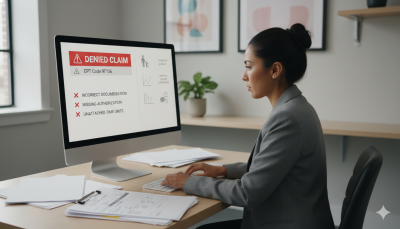
CPT 97156 Common Billing Mistakes That Trigger Claim Denials
-
Caregiver training is one of the most useful parts of ABA care. A child may practice skills during sessions, but progress often depends on what happens at home, at school, and in everyday routines. CPT code 97156 exists to support that carryover. It allows billing for caregiver guidance that is tied to the treatment plan when the patient is not present.
Here’s the problem. Many claims for 97156 get denied for reasons that have nothing to do with whether the session helped. Denials usually happen because the payer cannot clearly see that the service fits the code rules, the units are correct, and the documentation is strong enough to defend the claim.
Understanding CPT Code 97156: Covered Services
CPT 97156 is used when a qualified clinician provides caregiver or family guidance that supports the patient’s treatment plan, without the patient present.
Think of it as a coaching session where the caregiver learns and practices strategies that help the patient use skills outside direct treatment time. The key is that the session must connect to clinical goals and support progress through consistency and generalization.
CPT Code 97156: Exclusions and Limitations
97156 is not meant for:
-
scheduling or office tasks
-
general parenting tips
-
school meetings not tied to treatment goals
-
writing reports or assessments
-
casual updates without training or coaching
When a note reads like one of these, payers often deny the claim.
CPT 97156 Billing Errors That Commonly Lead to Denials
Payers deny 97156 for a simple reason: the claim and note do not clearly prove the service matches the code requirements.
Denials tend to fall into three buckets:
-
Patient presence confusion
-
Weak or vague documentation
-
Claim setup errors such as units, authorization, provider details, or telehealth fields
Most of these are fixable with a better workflow.
Billing 97156 When the Patient Was Present
This is one of the fastest ways to trigger a denial. If the patient is participating, even briefly, the payer may view the service as direct treatment or supervision time instead of caregiver guidance.
Even situations that feel minor can cause trouble, like:
-
the child sitting in the room while the caregiver is trained
-
the caregiver stepping away to manage behaviors during the session
-
the clinician interacting with the patient during the training
How to avoid it
-
Keep caregiver sessions separate from patient sessions whenever possible.
-
Document clearly that the patient was not present and did not participate.
-
If the patient was involved, choose a code that matches what actually happened.
Documenting Parent Training Without Treatment Plan Goals
A note can sound helpful but still be unbillable if it does not tie back to the treatment plan.
Weak examples:
-
Reviewed behavior strategies.
-
Provided parent training.
-
Discussed home routines.
These statements do not show what goal was targeted or why the session was medically necessary.
How to avoid it
-
Name the goal or target behavior being addressed.
-
Explain what strategy was taught and why it fits the plan.
-
Show how it supports carryover outside sessions.
Time-Based Billing Errors in Session Notes
Payers often compare billed units to the note. If the claim shows multiple units but the note reads like a short conversation, it looks questionable. If the note shows a long session but you billed too few units, you lose money.
How to avoid it
-
Write total time clearly.
-
If your payer requires start and end times, include them.
-
Make the content match the time. A longer session should show coaching, modeling, and caregiver practice, not a single sentence.
No Proof That the Caregiver Actively Participated
A common denial trigger is when the note shows the clinician talking but not the caregiver learning or practicing.
Payers expect caregiver guidance to include some active element such as:
-
demonstration or modeling
-
caregiver role-play
-
coaching with feedback
-
caregiver questions and corrections
-
a plan for home implementation
How to avoid it
Add one or two lines that show caregiver participation, for example:
-
caregiver practiced steps and received feedback
-
caregiver role-played responses
-
caregiver asked questions and summarized next steps
Missing or Incorrect Authorization Information
Some clinics do the session correctly, write a decent note, then get denied because the authorization details do not match.
Common problems include:
-
authorization expired
-
wrong code listed on authorization
-
wrong number entered on the claim
-
units exceeded
-
authorization tied to a different location or service type
How to avoid it
-
Verify authorization before the session happens.
-
Confirm the code and date range match.
-
Track remaining units weekly so you don’t accidentally exceed limits.
Provider Credentialing and NPI Issues
Many payers have rules about who can render and bill caregiver guidance. A claim can deny automatically if the wrong provider is listed.
Denials happen when:
-
rendering provider is not credentialed with that payer
-
taxonomy is incorrect
-
supervising provider information is missing when required
-
NPI details don’t match enrollment records
How to avoid it
-
Maintain a payer-specific checklist for rendering rules.
-
Audit NPI, taxonomy, and enrollment status regularly.
-
Ensure supervising fields are completed when the payer requires them.
Insufficiently Detailed or Duplicative Documentation
Notes that are repetitive or overly short increase risk. Even if services were real, copy-paste documentation can look like the session was not individualized.
How to avoid it
Use small, specific details each time:
-
target behavior or skill area
-
strategy taught (example: differential reinforcement, prompting, visual routine)
-
caregiver performance (what they did correctly, what needed adjustment)
-
next-step plan
This doesn’t need to be long. It needs to be clear.
CPT 97156: Administrative Time Not Eligible for Billing
97156 should reflect coaching and skill-building, not admin work.
Examples that should not be billed under 97156:
-
appointment reminders
-
forms and signatures
-
insurance discussions
-
general updates with no teaching or practice
-
scheduling school meetings
-
discussing transportation or staffing issues
How to avoid it
-
Separate admin discussions from billable caregiver guidance time.
-
If admin topics come up, document them outside the billed time.
Telehealth Fields and Modifiers Are Incorrect
Telehealth rules vary widely by payer. A claim that pays for one payer can deny for another due to:
-
place of service mismatch
-
missing telehealth modifier
-
missing telehealth statement in the note
-
authorization not allowing telehealth
How to avoid it
-
Create a payer-by-payer telehealth rule sheet.
-
Document the session method when required (video, location).
-
Confirm authorization includes telehealth when needed.
A Simple Pre-Claim Workflow That Prevents Many Denials
Most denials happen because there is no consistent check before claims go out. A short review step saves hours later.
A practical checklist includes:
-
patient not present confirmed
-
note tied to treatment plan goal
-
caregiver participation shown
-
units match time
-
authorization active and correct
-
rendering provider allowed for payer
-
telehealth fields correct when applicable
Right in the middle of daily operations, ABA billing becomes easier when the goal shifts from fixing denied claims to preventing them. That change protects time, reduces rework, and keeps documentation cleaner across the board.
FAQs
1) Can CPT 97156 be billed if the patient is in the home but not in the session?
It depends on payer rules; if the patient is nearby or briefly involved it may be seen as present, so keep the session clearly separate and document that the patient did not participate.2) What should a strong 97156 note include?
Include the treatment-plan target goal, the strategy taught, caregiver practice or role-play with feedback, total time, and how the guidance supports carryover at home or in the community.3) Can 97156 be billed on the same day as other ABA services?
Sometimes, yes, as long as services are separate and clearly documented, and you follow payer rules, authorization limits, and any required modifiers.4) Is 97156 covered by Medicaid?
It varies by state and plan, but many Medicaid programs cover it with prior authorization and specific limits or documentation rules.5) What is the most common reason 97156 gets denied?
Unclear documentation, especially when the note does not clearly show the patient was not present or does not link the session to treatment plan goals.Conclusion
CPT 97156 is a useful code when used correctly, but it is sensitive to small errors. The most common denial triggers are patient presence confusion, weak treatment-plan linkage, unit and time mismatch, authorization problems, provider enrollment issues, and telehealth setup errors.
The fix is not complicated. Keep caregiver sessions clearly defined, document the goal and the coaching, match time to units, and run a short pre-claim check every time. When those basics are consistent, 97156 claims become far more reliable and far less stressful to manage.
-