Categories
Tags
-
#fashion
#productivity
#Hip Hop
#streetwear
#lifestyle
#personal growth
#music production
#Circadian Rhythm
#Authenticity
#creativity
#Work-life balance
#vintage fashion
#Youth
#creative work
#street food
#Identity
#local music
#underground artists
#live performance
#community culture
#supporting musicians
#street art
#graffiti culture
#urban art
#city culture
#community
#night owl
#sleep schedule
#neighborhood
#urban culture
#local vibes
#city life
#live performances
#independent artists
#music community
#underground scene
#sneaker culture
#personal observations
#street wisdom
#metropolitan living
#skateboarding
#street culture
#youth culture
#creative expression
#urban lifestyle
#thrift stores
#sustainable shopping
#personal style
#treasure hunting
#late night food
#eating culture
#food community
#urban life
#underground hip hop
#hip hop culture
#hip hop community
#neighborhood life
#city living
#hustle culture
Archives
The Real Talk on Graffiti and Why Your City Needs It More Than You Think
-
Posted by Dez Fontaine Filed in Arts & Culture #creativity #street art #graffiti culture #urban art #city culture 62 views
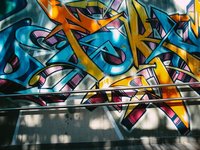
So I'm walking through the warehouse district last week, right, and there's this massive piece that just stopped me in my tracks. Full wall, maybe twenty feet across, and it's this intricate wildstyle with these characters that look like they're literally breathing off the concrete. And I'm standing there like some tourist with my phone out, and it hits me that most people walking past that wall have no idea what they're actually looking at. They see vandalism. They see a problem. They don't see the art.
That's the disconnect I want to talk about today because I used to be that person too. Grew up thinking graffiti was just kids being destructive, you know? Then I actually started paying attention. Started understanding the culture, the skill, the legitimate artistic expression happening on walls all over the city. And once you see it that way, you can't unsee it.
Here's what people don't realize about street art and graffiti. It's not some new thing. It's not some phase. This goes back decades, back to the early subway writers in New York in the seventies, cats literally risking arrest to get their names up because they had something to say and the world wasn't giving them a platform. That same energy, that same hunger to create and be seen, that's still alive today. It's just evolved.
The skill involved is genuinely insane when you really look at it. I'm talking about understanding composition, color theory, perspective, technique with spray cans that takes thousands of hours to master. These aren't just tags. Some of these pieces are more technically skilled than stuff you'd see in galleries charging thirty bucks for entry. The difference is one's on a wall in an alley and the other's on a white cube in a converted loft. Both are art. One just doesn't come with an Instagram location tag and a price list.
What's wild to me is how cities are finally catching on. I've seen entire neighborhoods get revitalized because street artists were commissioned to transform blank walls into community spaces. You get real talent, real creativity, and suddenly a dead corner of town becomes something people actually want to visit. It's economy and culture colliding in a way that makes sense. That's not accidental. That's the power of graffiti and street art being recognized for what it actually is.
But here's where I get real about it. There's a difference between intentional street art and straight vandalism that's just disrespecting someone's property. I'm not talking about bombing someone's shop or their house. That's not art, that's just being destructive. The distinction matters even if purists don't want to hear it. The best writers, the ones I respect, they understand that line. They know where they can express and where they're just being selfish.
What gets me though is watching younger artists come up now and seeing how they navigate this space. Some get legal walls and opportunities early. Others are doing it completely underground, building their style in dark hours, at risk, because that's where the realness still lives. Both paths are valid. Both are creating something that represents the moment we're in right now.
The honest truth is that street art and graffiti are a mirror for whatever city you're in. If you want to understand a place, don't just hit the tourist spots. Walk the streets. Look at the walls. You'll see the stories people want to tell. You'll see rebellion and beauty and frustration and hope all mixed together in layers of paint.
Cities without this energy feel dead to me. They feel controlled and sanitized in a way that doesn't reflect actual life. Give me a city covered in murals and pieces and tags that represent a living, breathing community over some sterile downtown any day.
So what's the street art and graffiti situation looking like where you are? You paying attention to it or just walking past? And more importantly, what would it take for you to actually see what's really going on with the walls in your city?