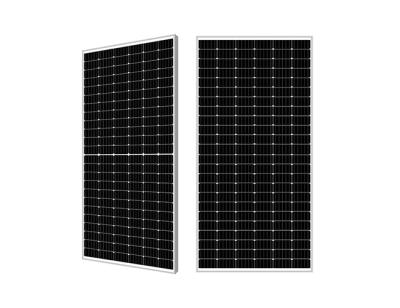
How to Identify Monocrystalline and Polycrystalline Solar Panel
-
Solar panels are divided into monocrystalline, polycrystalline and amorphous silicon. Currently, most solar panels use monocrystalline and polycrystalline materials. So, how to identify monocrystalline and polycrystalline solar panels? What are the characteristics of monocrystalline or polycrystalline solar panels?
Identify from the Visual Appearance of Monocrystalline and Polycrystalline Solar Panels
To distinguish between monocrystalline and polycrystalline silicon solar panels, start by observing their color and appearance. Monocrystalline panels typically have a uniform black or very dark hue, giving them a sleek and modern look. The individual cells often appear rounded at the corners because they are cut from cylindrical silicon ingots. In contrast, polycrystalline panels usually appear in varying shades of blue, with a shimmering, mosaic-like surface. This is due to their structure, which contains multiple silicon crystals, giving them a more fragmented or grainy look. The cells on polycrystalline panels are usually perfectly square, without the rounded edges seen in monocrystalline panels.
Identify from the Materials of Monocrystalline and Polycrystalline Solar Panels
Monocrystalline and polycrystalline solar panels are two different materials. Polysilicon is a chemical term, commonly known as glass. High-purity polycrystalline material is high-purity glass. Monocrystalline silicon is the raw material for solar photovoltaic cells and semiconductor chips. The raw materials of monocrystalline silicon are rare and the production process is complicated. Therefore, the production rate is low and the price is very high.
Identify from the Processing Technology of Monocrystalline and Polycrystalline Solar Panels
In simple terms, the difference between monocrystalline and polycrystalline solar panels is the arrangement of their atomic structure. Monocrystalline is arranged in order while polycrystalline is arranged in disorder. This is mainly determined by their processing technology. Polycrystalline solar panels for sale is produced by the casting method, which means that the silicon material is directly poured into a pot to melt and mold.
The monocrystalline adopts the Siemens process to improve the Czochralski method, which is a process of atomic restructuring. The surface of monocrystalline silicon looks the same, and the surface of the polycrystalline silicon looks like there is a lot of broken shining glass.
Category Monocrystalline Polycrystalline
Anern Product
Silicon Purity High (single crystal structure) Lower (multiple crystal fragments)
Appearance (Color) Black Blue
Cell Shape Rounded or cut corners Square
Efficiency Rate 18%–23% (higher) 15%–17% (lower)
Low Light Performance Better Moderate
Heat Tolerance Slightly better; less performance loss in heat Slightly worse; more loss in high temperatures
Cost Higher (more complex production process) Lower (cheaper to produce)
Value for Money Better performance but more expensive More affordable but less efficient
Best Use Cases Limited space (e.g., urban rooftops) Ample space (e.g., rural areas or solar farms)
Typical Users Performance-focused users with sufficient budget Budget-conscious users or large-scale applicationsMono Solar Panel vs. Poly Solar Panel
Solar Panel Amorphous vs. Crystalline
Feature Amorphous (a-Si) Crystalline (Monocrystalline & Polycrystalline)
Material Non-crystalline silicon Crystalline silicon
Efficiency 6–10% 15–22%
Cost Lower Higher, especially mono
Durability Shorter lifespan (10–15 years) Long lifespan (25+ years)
Flexibility Flexible, lightweight Rigid, heavier
Performance in Low Light Better, more diffuse light absorption Good, but less efficient in shade
Space Required Requires more surface area More power per m²
Temperature Tolerance Slightly better Can lose efficiency as temperature rises
Use Cases Portable devices, BIPV (building-integrated), flexible surfaces Rooftop installations, utility-scale solar farms
Anern can assist you in customizing solar power systems for a wide range of commercial and home solar applications. We provide grid-tied,off-grid, hybrid, and all of the components, including Anern solar panels and Anern solar generators, that are necessary to construct and operate an Anern solar power system.
As a china led light company, we will do our best to meet all the needs of customers.