
The impact of material validation on NVH testing
-
Posted by Hasetri Tyres Filed in Other #rubbertestinglab #nvhtesting #vehicledynamics #polymertesting 40 views
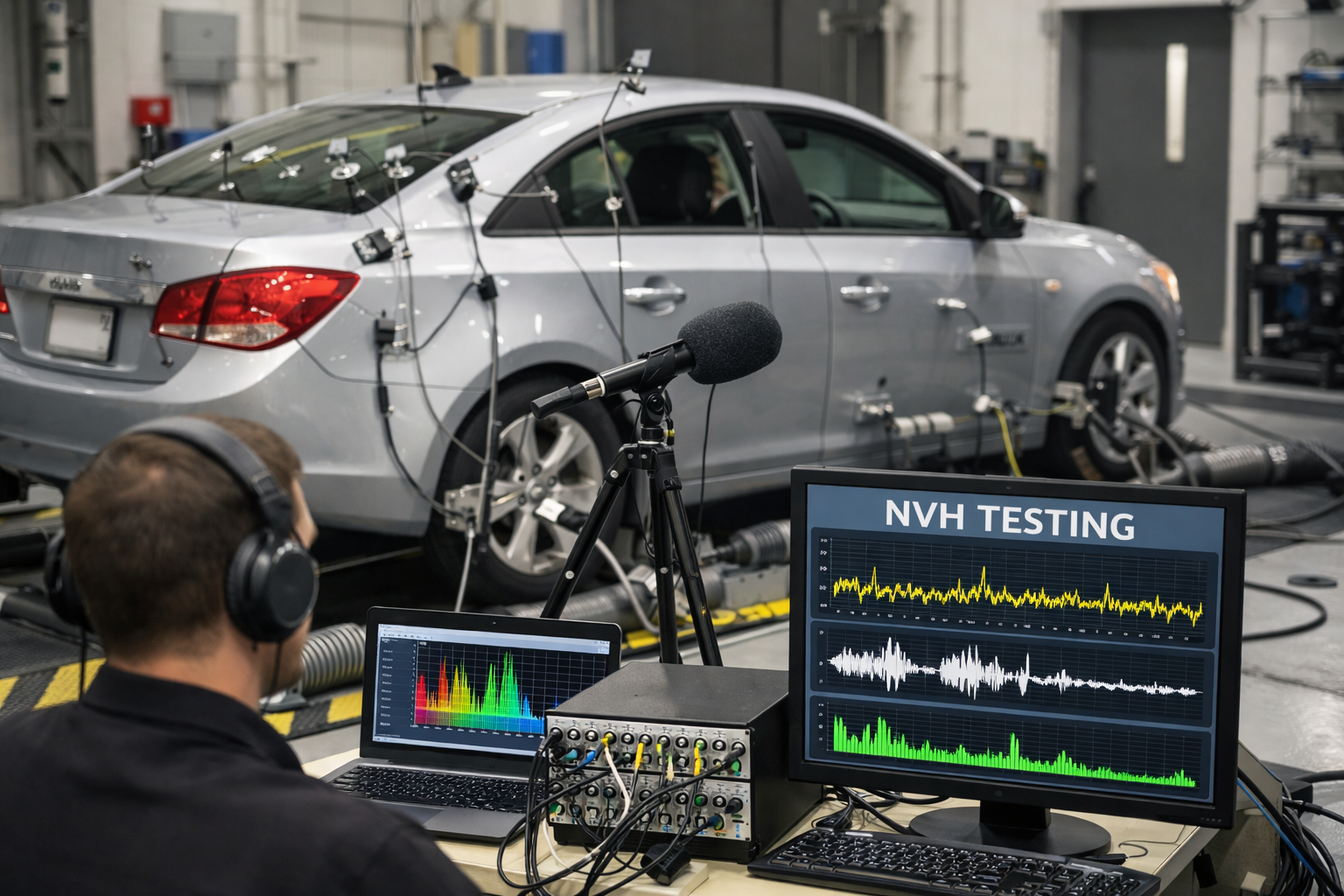
Ride quality is strongly influenced by how effectively a vehicle controls vibration and noise under real driving conditions. NVH testing is used to assess these characteristics, helping engineers understand how sound and vibration affect passenger comfort. As vehicle architectures evolve, the role of materials becomes increasingly important. Rubber and polymer components serve as the primary elements that absorb and isolate vibration, making accurate material validation essential for achieving consistent ride quality. When materials are not thoroughly validated, NVH performance can vary across operating conditions, leading to unpredictable comfort levels.

Relationship Between Material Behavior and Vehicle Dynamics
The interaction between materials and motion lies at the heart of vehicle dynamics. Polymer-based components connect structural systems and influence how forces are transmitted through the chassis. Variations in stiffness or damping can alter suspension response, steering feel, and overall ride stability.
Through structured polymer testing, engineers can characterize how materials respond to dynamic loads, temperature changes, and frequency variation. This data ensures that material properties support stable vehicle dynamics while contributing to effective vibration isolation during NVH testing.
Role of Polymer Testing in Accurate NVH Evaluation
Rubber compounds are complex polymer systems whose performance depends on environmental and loading conditions. Polymer testing provides detailed insight into properties such as dynamic stiffness, damping behavior, and fatigue resistance. These parameters directly influence vibration control and acoustic performance.
Without comprehensive polymer testing, NVH testing results may fail to reflect real-world behavior. Material validation ensures that laboratory measurements accurately represent how components perform throughout the vehicle lifecycle.
Importance of a Polymer Testing Lab in Development Programs
A dedicated polymer testing lab offers the controlled environment needed to generate reliable material data. These labs conduct dynamic mechanical analysis, endurance testing, compression set evaluation, and environmental aging studies. Each test simulates conditions that materials experience during actual vehicle operation.
Data generated in a polymer testing lab strengthens correlation between simulation models, bench tests, and vehicle-level NVH testing. This alignment reduces uncertainty and improves confidence in development decisions.
Enhancing Simulation Accuracy and Ride Comfort Prediction
Simulation tools are essential for predicting NVH behavior, but their accuracy depends on realistic material inputs. Incomplete or assumed data often leads to discrepancies between predicted and measured outcomes. Integrating results from polymer testing into vehicle dynamics simulations improves prediction accuracy.
When simulations closely reflect physical behavior, NVH testing becomes more efficient. Engineers can identify vibration and noise issues early and optimize designs to enhance ride comfort without repeated trial and error.
Addressing NVH Challenges in Modern Vehicles
Lightweight construction and electrification have introduced new NVH challenges. Reduced background noise makes vibration more noticeable, while structural sensitivity increases the demand for precise damping solutions. Validated polymer materials are essential for managing these conditions.
Accurate NVH testing, supported by robust polymer testing, enables manufacturers to maintain high ride quality while preserving stable vehicle dynamics and durability.
Validation Support Through Specialized Rubber Testing Facilities
In the final stage of development, insights from a rubber research lab support compound development and material optimization for vibration-critical applications. Performance confirmation conducted in a rubber testing lab ensures durability, consistency, and compliance with quality standards. When validation data from these facilities is aligned with NVH testing, vehicle dynamics, and polymer testing lab outputs, manufacturers achieve reliable NVH performance and consistently high ride quality across vehicle platforms.
Also Read :