What Sellers Must Disclose About a House
-
If you have begun the search for your dream home, you probably already know how fun it is to explore homes. Almost every MLS listing in Ajax you explore might feel like the one, with those beautiful listing photos and fresh upgrades. But did you know there’s often more to these homes than meets the eye? That’s right! There could be hidden issues behind all the nice finishes and perfect photos that the seller is aware of but hasn’t shared with you, even though they are supposed to.
Up ahead, we will walk you through what home issues sellers are legally required to disclose in Ontario and what issues you, as a homebuyer, need to uncover on your own. Being aware of this upfront can help you steer clear of financial problems and serious homebuyer regrets.
The Facts Home Sellers Must Legally Share With Buyers in Ontario
According to the Real Estate Council of Ontario (RECO)’s 7.4 Bulletin, sellers must legally disclose any known latent defects. Latent defects are significant problems in MLS listings in Ajax that aren’t visible to the naked eye or easily discoverable during a basic inspection. These issues can pose a safety risk or make the home unfit to stay in. If a seller is aware of such a defect in their house, they are legally required to inform all interested buyers.
But, and this is something you really need to keep in mind, sellers are not required to disclose every issue with the home. In Ontario, real estate sales follow the principle of caveat emptor, or buyer beware. Under this legal rule, if there is a visible issue in the house (patent defect), it is entirely up to you (the buyer) to notice it. So, while sellers must disclose serious hidden problems they are aware of, they are not legally obligated to tell you everything.
A Breakdown of What Home Sellers Have to Disclose Legally
As stated in the previous section, real estate law draws a firm line in case of known latent defects in a home. A seller has a legal obligation to disclose these serious issues, even if you, as the buyer, don’t directly ask about them.
Here are some examples of latent defects in an MLS listing in Ajax, Ontario that home sellers are legally required to disclose:
- A sinking foundation.
- Mould behind the walls.
- Unsafe electrical wiring.
- Cracked or bowed basement walls.
- Roof leaks.
- History of flooding in the basement.
These issues can put a homeowner’s health, safety, and wallet at serious risk. That’s why the law requires sellers to disclose any latent defects they are aware of, to protect homebuyers. Without this legal requirement, sellers could simply conceal dangerous defects and leave homebuyers to deal with the consequences.
What Happens if a Seller Stays Quiet on Known Latent Defects?
Sellers who are aware of such defects and choose not to disclose them could face serious legal consequences. The buyer can file a lawsuit against the seller and claim compensation for the repair costs or the loss in property value. In rare cases, the court may also reverse the sale, with the buyer returning the house, and the seller repaying the purchase price.
Buyers usually have a specific timeframe to file a case against the seller for known latent defects. In Ontario, homebuyers have two years from the day they uncover the defects to file a lawsuit.
A Real-Life Case That Shows the Serious Consequences of Hiding Defects for Sellers
In 2004, Timothy and Cherese Scherbak listed their Sudbury home and filled out a Seller Property Information Statement (SPIS). The SPIS is a form that sellers sometimes fill out to provide written answers about the condition of their home. In the SPIS form, the Scherbak couple stated that one corner of the house sank into the ground 17 years ago. However, the owners mentioned they had not faced any structural issues since then.
Buyer Zoriana Krawchuk, represented by the same agent as the sellers, waived the home inspection and purchased the Scherbaks’ house for $110,100, $10,000 over the asking price. After moving in, Krawchuk discovered the house’s foundation was sinking, leading to major structural issues that cost her $197,000 to fix. She received $105,000 from her title insurer and soon after, filed a case against the Scherbaks.
The trial judge found the seller guilty of negligent misrepresentation, awarding Krawchuk $110,000. The Ontario Court of Appeal also held the real estate agent equally responsible for not urging Krawchuk to get a home inspection. Krawchuk’s total damages were split: $55,000 from the sellers and $55,000 from the agent. This case highlights the risks of non-disclosures for sellers and underscores a buyer’s right to know about latent defects before purchase.
The Issues Home Sellers Can Stay Silent About
Here are the issues sellers don’t have to mention unless you, the homebuyer, ask or uncover them yourself -
1. Visible Damage You Can See For Yourself (Patent Defects)
Patent defects are surface-level issues you can spot during a home tour, such as cracked tiles or stained ceilings. The law assumes that you can clearly see these defects during a showing or inspection. Hence, sellers are not legally required to point these things out to the buyer.
2. Uncomfortable or Tragic Events Tied to the House
If the home was the site of a murder, suicide, or other traumatic event, it is considered a stigmatised property. The law doesn’t require sellers to disclose these stigmatised events unless buyers specifically ask.
3. Neighbourhood Issues That Might Affect Quality of Life
Sellers are also not required to inform about issues outside the property line, such as noisy neighbours or traffic jams at rush hour. These issues fall under buyer due diligence; it is up to the buyer to discover these neighbourhood problems.
4. Anything the Seller Genuinely Doesn’t Know
If the seller doesn’t know there’s a mould problem inside the walls or a slow leak under the basement floor, they have no legal duty to report to buyers.
Key Takeaway: Try to Catch the Defects Early - Your Wallet Will Thank You
True, there are laws in place to protect you if your new Ajax home has hidden issues or latent defects. But here’s the catch: those legal protections will only help you if you act within a timeframe. Additionally, you will also have to prove the seller was aware of the problem and chose not to disclose it. That’s a big “if” given how significant the home purchase is.
That’s why you must be proactive from the start and get the home professionally inspected. A home inspection costs between $300 and $600, but it could save you thousands of dollars in surprise repair costs later on.
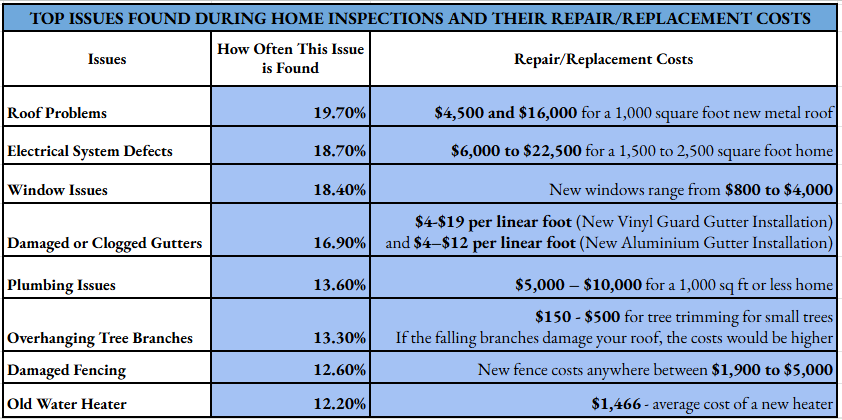
Source - Inspection Support Network, Dream Roof, Home Guide, Home Depot, Reno Quotes, Plumber Canada, Tree “B” Gone, Home Stars, JPS Furnace
Also, ensure you have a trusted realtor in Ajax by your side. The real estate expert will carefully review any seller disclosures and catch red flags during showings.
In short, team up with trusted professionals, read between the lines of every listing, and question everything. A little extra caution now can save thousands and a lot of stress later on.